




| The Piazza dei Miracoli (Italian: Square of Miracles), formally known as Piazza del Duomo (Italian: Cathedral Square. Pisa, Italy. Courtesy: Wikipedia, the free encyclopedia. |
|---|
The Piazza del Duomo or "Cathedral Square" is a wide, walled area at the heart of the city of Pisa, Tuscany, Italy. It is dominated by four great religious edifices: the Duomo, the Leaning Tower (the cathedral's campanile), the Baptistry, and the Camposanto. The Piazza del Duomo is called the Piazza dei Miracoli or "Square of Miracles". The Italian writer and poet, Gabriele d'Annunzio, in his novel, Forse che si forse che no, gave it this name. The Piazza del Duomo was declared a UNESCO World Heritage Site in 1987.
THE HISTORY OF PISA:
The area was first settled by the Liguri and was then inhabited by the Etruscans. Pisa's growth into a city arrived with the Roman era. At that time, Pisa was a small coastal town but a very important Roman port. Pisa is divided into two parts by the River Arno, which flows through Florence, and then flows into the Tyrrhenian Sea at Marina di Pisa. Nowdays the coast is about 12km away, since debris from the river blocked up its watercourse downstream and moved the coastline further away. However, "Pisa" remained important as a shipbuilding center to this day. "Darsena Pisana", the Pisan Dock, still is important to the local economy and it can be seen from the highway about 1 km from Pisa's Galileo Galilei International Airport. During the Early Middle Ages, Pisa was a very important port and commercial center. It also was one of the four Maritime Republics ( the other three were Amalfi, Venice and Genoa ), which fought for control of the Mediterranean Sea. This was a time of both war victories and wealth for the city, which had colonies all over the Mediterranean coasts and was not only feared but respected. This time of Pisa's history is celebrated each year with a Regatta. The Regata delle Repubbliche Marinare, is held in Pisa every four years in June. Pisa declined in power and wealth during the 13th century. It's conflicts with Genoa, resulted in a defeat during the battle of the Meloria (1268), which was the beginning of Pisa's loss as a maritime power. During the same time period, conflicts with the Guelph cities in Tuscany began, along with internal struggles for the control of Pisa. One of the most natorious persons in the history of Pisa is Count Ugolino della Gerardesca, who is described in Dante's Divina Commedia. Even though he was accused of treachery at the Meloria battle, at few years later he became Lord of Pisa. Then in 1289, the Archbishop ordered his imprisonment in the Gualandi Tower with his children and grandchildren and left there to starve. Local legend says that he ate his children and grandchildren. During the 14th century, Pisa continued to suffer battles and revolts. On October 9th 1406, the hated Florentine army entered the city and Pisa was placed under the rule of Florence until 1861. In the 18th, 19th 20th and 21st centuries Pisa continued to grow with its grand University, which is one of the most prestigious in Italy and in all of Europe. Pisa was almost destroyed by bombing during World War II, but it is now being restored and brought back to its glory.
We were there in August of 1999.
|
Getting to Pisa, Italy: The Galileo Galilei International Airport (IATA: PSA, ICAO: LIRP) is located in Pisa, Italy. It is the most important airport in Tuscany, connecting the city with major Italian and European destinations. The airport is just one kilometer from the city. Connections are both by train or bus. The train goes directly to Pisa Central Station; bus line 1 passes through the main city streets and arrives to Piazza dei Miracoli. The taxi rank is located opposite the airport exit door. On leaving the Arrivals Terminal, turn immediately right. Here you will find the "Collective Taxi" service from the airport to Pisa Central Station up to Piazza Duomo. Maximum no. of people is 8 with a set rate per person. There are numerous flights into Pisa and numerous hotels in Pisa. There are several Guided Tour Agencies offering standard city, and historical tours of Pisa and the surrounding area. After arranging your flight we would suggest getting your hotel and then letting them arrange tours of the area for you. If you call the hotels Concierge Services ahead of your arrival, all of this can be pre-arranged for you. We do this all the time. It is safe and it works!!! We have never experienced a problem doing it this way! We have links to Priceline.com on our page so that you can arrange your flight and hotel in Pisa.
Special Note - To Arrange Tours: A New Way To Arrange Your Tours Has Become Popular. It makes the process of getting a tour easy, and timesaving for you. It also is almost always less expensive. In most cases when you are at an attraction, you will be escourted to the front of the line, and be given special treatment. It is viator.com. They can do all of the work for you and get you into some awesome tours of the various attractions.
Here is a link to viator.com where you can arrange many special tours in Italy. Find and book Italy tours and activities on Viator.com. Book ahead to save time and money!
|

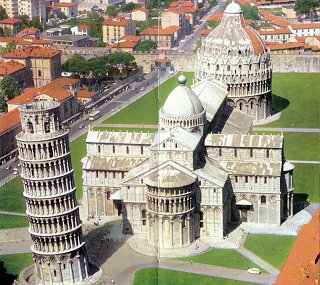 | 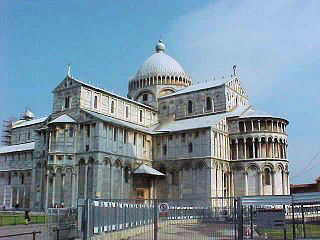 |
| "Piazza dei Miracoli" The Cathedral Square | The Cathedral Construction Started In 1063 A. D. |
|---|---|
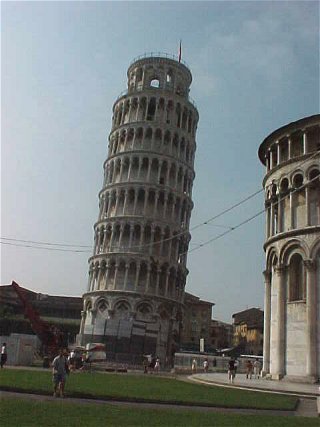 | 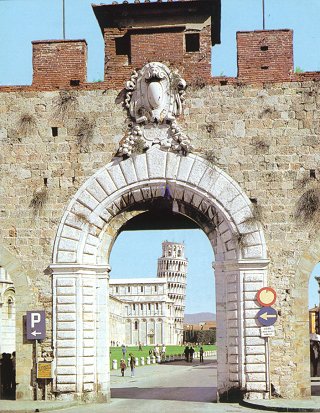 |
| The Leaning Tower | Cathedral Square From The New Gate |
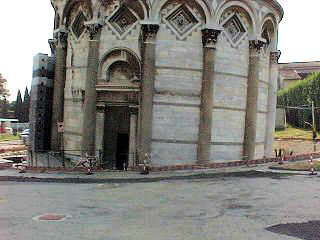 | 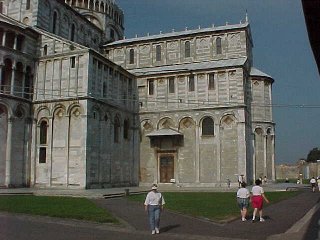 |
| Bottom Of Leaning Tower It Began Leaning With The Addition Of The Third Story In 1174 A. D. | Audrey At The Cathedral |
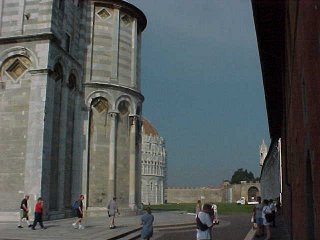 | 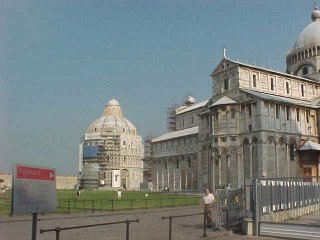 |
| The Tower Isn't The Only Leaning Structure | The Cathedral Dome |
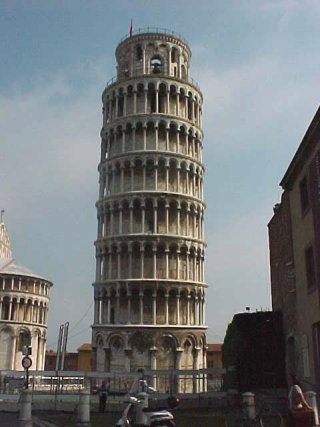 | 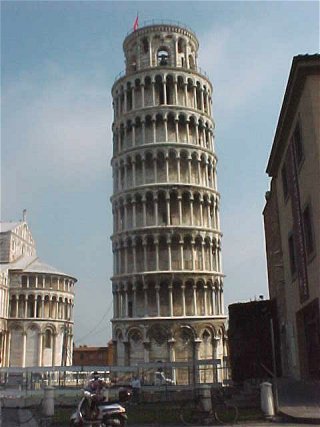 |
| George & The Leaning Tower | Audrey & The Leaning Tower |
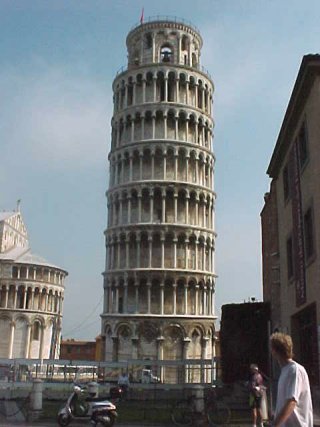 | |
| Audrey & The Leaning Tower | Audrey & The Leaning Tower |


| 9-Day Best of Italy Tour from Milan Including Rome, Tuscany and Venice - $1,324.37 See the best of beautiful Italy on this 9-day tour from Milan! With an expert guide at your side, visit Rome, Umbria, Tuscany, Veneto, the Italian Lakes and Milan, taking in world-class attractions like Rome Pantheon, Florence Duomo and Venice's Basilica di San Marco. Hotel accommodation in the top cities of Rome, Florence, Venice and Milan are included, plus guided walks and a free departure transfer to Rome (should you need it), ensuring you have everything you need to discover Italy with ease! |
| 6-Day Italy Tour from Rome Including Venice, Verona, Milan, Florence, Pisa and Siena - $2,339.94 Discover Italy's most beautiful and historically significant cities and towns on this 6-day tour from Rome. Sightsee in style from the comfort of an air-conditioned minivan as you travel to the likes of Venice, Verona, Milan, Florence, Pisa and Siena. Make the most of your time with guided or panoramic tours in each destination and skip-the-line entrance tickets to famous attractions such as Doge's Palace in Venice and Accademia Gallery in Florence. Superior 4-star accommodation, breakfast and gourmet 3-course dinners are included. Numbers limited to 15 people, ensuring a small-group experience. |
 | 5-Day Italy Trip: Florence, Pisa and Venice - $719.03 Get to know Florence and Venice on a 4-night tour from Rome! With guided tours of each city plus plenty of free time to relax, the package is perfect for experiencing the best of these two incredible Italian cities. An additional visit is also included to Pisa for a walking tour of Cathedral Square, seeing the UNESCO-listed Leaning Tower of Pisa and Duomo di Pisa. Four nights of 3-, 4- or 4-star superior hotel accommodation' two nights in both Florence and Venice ' is included plus transport by coach or train from once city to the next. The tour finishes in Venice, making it an ideal option if you want to spend longer in one of the world's most romantic cities. |
 | 3-Day Italy Trip: Florence and Pisa - $377.91 Escape to the romance of Tuscany on a 3-day tour from Rome! The rolling hills of Tuscany continue to shape Italy's rich culture, be it through art, history or the finest Italian produce. Departing Rome, you will travel to the heart of Tuscany in Florence. The city is home to an abundance of paintings and sculptures housed in numerous galleries and public squares. Next it's onto Pisa with its biggest attraction, the Leaning Tower. |
 Livorno Shore Excursion: Pisa and Florence Private Day Trip - $104.04 When your cruise ship docks in Livorno and you have only a single day to see the surrounding Italian towns of Pisa and Florence, you'll need a privately guided shore excursion to see the best of these picturesque cities. On this trip from Livorno, immerse yourself in Italian life, explore the historic streets of Florence and see the famous Leaning Tower of Pisa before returning to your cruise ship. |
Private Tour: Pisa and the Leaning Tower - $82.21 Set off on a panoramic drive along the Arno embankments to Pisa, on this half day private luxury tour accompanied by your own English-speaking driver. |
 Pisa Half-Day Trip from Florence Including Skip-the-Line Leaning Tower of Pisa Ticket - $72.46 See the highlights of Pisa on a day trip from Florence, and use a skip-the-line ticket to climb the UNESCO-listed Leaning Tower of Pisa. After traveling through the gorgeous Tuscan countryside, explore the city on a walking tour, visiting sites like Cathedral Square (Piazza dei Miracoli) and Knights' Square (Piazza dei Cavalieri). Learn about the history and architecture of monuments like the Church of San Sisto, and then gaze in awe at incredible views from the top of the Leaning Tower of Pisa. |
Cultural Walking Tour of Pisa with Leaning Tower of Pisa Entry Ticket - $43.47 Explore Pisa on a comprehensive 1.5-hour tour with access to the UNESCO-listed Leaning Tower of Pisa. After a walking tour of Cathedral Square (Piazza dei Miracoli), seeing monuments like Pisa Baptistry, explore the city's historical quarters and visit the Church of San Sisto and Knights' Square (Piazza dei Cavalieri). Then, get ready to enter to the Leaning Tower of Pisa and climb the monument's 294 steps to enjoy breathtaking views from the top! |
| Back To Europe Trip Page
|
| Back To DeLange Home Page
|