
 |
| Click On This Photo For Professional High Quality Peru Tours From Magical Cusco Tours Just Mention delange.org With Code Inka2010 Get A 4% Tour Discount With Any Package Tour Purchase! |
|---|

National Museum Of The Archaeology,
Anthropology, & History Of Peru
Or
Museo Nacional de Arqueología,
Antropología e Historia del Perú
Lima Peru
Travels And Tours
Photos, Pictures, Images
Descriptions, Information, & Reviews.
George & Eve DeLange.
Google Map To Museo Nacional de Arqueología
Antropología e Historia del Perú, Lima, Peru
View Larger Map
The National Museum of the Archaeology, Anthropology, and History of Peru or Museo Nacional de Arqueología, Antropología e Historia del Perú In Lima Peru: The Museo Nacional de Arqueología Antropología e Historia del Perú (English: National Museum of the Archaeology, Anthropology, and History of Peru) is the largest and oldest state museum in Peru, located on Plaza Bolívar in the Pueblo Libre district of Lima. It is perhaps the most visited museum in Lima, located at the heart of Pueblo Libre. This museum is known for having one of the best pre-Columbian exhibits in the world. It offers incredible Paracas textiles and a huge selection of pottery. When visiting this museum; you may also wish to visit the nearby, Museo Rafael Larco Hererra, which houses the largest collection of Moche artefacts in the country. It is about 3,000 feet west of the National Museum of the Archaeology, Anthropology, and History of Peru. The old colonial mansion housing the Museo Nacional de Arqueología Antropología e Historia del Perú, was the old residence of Peru`s viceroys and then of its Liberators. The Museo Nacional de Arqueología, Antropología e Historia del Perú is Peru`s biggest museum and it contains both the Estela Raymondi and the Tello Obelisk stones. Which are two very important carved stone pieces dating back to the Formative Period of about 1000 years B.C. It also features the largest textile collection, from the pre-ceramic period through the Inca Empire, and a major collection of Ancient Peruvian metals. The remarkable Tawantinsuyo Room shows the history of about one hundred years of the Inca Empire by using virtual models and re-creations. The Chavin Horizon Culture generally had a peaceful way of life which was a major influence upon the other cultures of northern Peru. Their ruins are generally not the giant structures with incredible carvings as other cultures are known for. The real marvel of the Chavin is the complex network of underground tunnels and chambers, at their major ruins and the fact that they were built almost 3,000 years ago using stone tools. One such ruins called Lanzon de Templo Viaje is made of stone blocks that were cut and fit with such precision that would be difficult to equal it today with modern power tools. It has a main plaza that is a perfect square of about an acre, and it has a one-meter incline with a system of drainage tunnels so that it will not flood. The whole temple complex is aligned, from north to south, with a line running from the main temple entrance through the plaza, dividing it into the four directions. Above the plaza rises the temple, a three-tiered square that is flat on top and still amazingly intact considering its age. There is another smaller, ceremonial plaza next to the temple, but this one is remarkable for its perfect roundness. There are several different types of tunnels in the underground temple making up a complicated maze of galleries, water-tunnels and passages. The Tello Obelisk from that ruins is now in the National Museum of the Archaeology, Anthropology, and History of Peru. We have photos of it on this page. Another well-known archaeological ruin of the Chavín era is called Chavín de Huántar, located in the Andean highlands just north of Lima. It is believed to have been built around 900 BCE. The ruins of Chavín de Huántar stretch along the banks of the Mosna River. They are large terraced pyramid platforms faced with stone slabs and riddled with stone-lined galleries and rooms which are grouped around a sunken plaza. A famous stela from there is called the Raimondi Stela. It is named after an Italian traveler, Antonio Raimondi, who found the stela in the hut of a peasant in Callejon de Conchucos in 1874. The stela is carved in the image of a god, possibly the main god worshiped in the new temple of Chavín de Huántar. It contains a figure known as the "Staff Bearing God" which covers only the bottom 1/3 of the stela. The upper 2/3 is made up of a head dress. The Chavín artists made use of the technique of contour rivalry in their art forms, the Raimondi Stela is considered to be one of the finest known examples of this technique. Contour rivalry means that the lines in an image can be read in many ways, depending on which way the object is being observed. When the Raimondi Stela is viewed one way, the image depicts a fearsome god holding two staffs. His eyes look upward toward his large, headdress of snakes and volutes. This same image, when flipped over, now turns into a stacked row of smiling, fanged faces. The god's face has turned into the face of a smiling reptile. The god's staffs now appear to be rows of stacked faces. The Raimondi Stela is also located in the National Museum of the Archaeology, Anthropology, and History of Peru. The Chavín Shaman used the San Pedro Cactus ( Trichocereus pachanoi ) in many of their rituals since the cactus contains the hallucinogenic alkaloid mescalin. We will show many other objects on display at the museum without much comment as to what the actual pieces are since it was not noted at the museum. Of course there were so many objects that we can not show them all. We were at the National Museum of the Archaeology, Anthropology, and History of Peru on April 11, 2006 at about 1:00 PM. We are placing large images of their most well known objects on this page for your enjoyment. The "Chavín Tello Obelisk" and The "Chavín Raimondi Stela".
|
The Jorge Chávez International Airport (IATA: LIM, ICAO: SPIM), known as Aeropuerto Internacional Jorge Chávez in Spanish, is Peru's main international and domestic airport. It is located in Callao, 11 kilometers (7 mi) from the Historic Centre of Lima and 17 km (11 mi) from Miraflores. Callao is the port city which is now fully integrated with Lima, the nation's capital.
There are several Guided Tour Agencies offering standard city, Hiking, and archaeological tours of Lima and the surrounding area. We suggest Flying into Lima and then going to the surrounding areas of your choice.
This page is for information purposes only and while we have made every effort to be accurate, it is the travelers responsibility to make the appropriate choice as to which hotels to use in Peru.
We found that when touring Peru, Magical Cusco Tours gave us the best service of all. They even arranged very personal tours based upon our ages and experience. They were there for us whenever we needed them. Click on any of their links on our pages and they will give you a 4% discount for taking their package tours. Mention delange.org. Merchant Code Inka2010 for your discount! We suggest letting Ana Maria handle your tour. Note: The 4% discount applies to package tours only! Discount does not apply to hotel bookings, domestic or international tickets, meals or any other service booked as a single activity.
Magical Cusco Tours also has a culinary tour that you may enjoy.Click Here For: Taste Of Peru.com their culinary tour page.
We also have links to Priceline.Com on our pages, in case you may prefer to use their services.
|
 |
| The National Museum Of Archaeology, Anthropology, And History Of Peru. Chavín Tello Obelisk. |
|---|
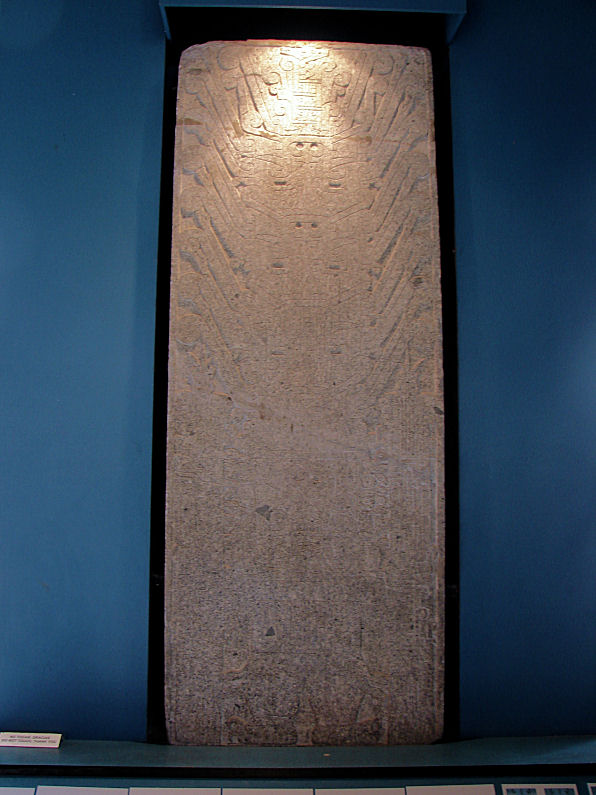 |
| The National Museum Of Archaeology, Anthropology And History Of Peru. Chavín Raimondi Stela. |
|---|
 |
| The National Museum Of Archaeology, Anthropology, And History Of Peru Courtesy Of: Museo. |
|---|
 | |
| Courtyard The National Museum Of The Archaeology, Anthropology, & History of Peru. | Courtyard The National Museum Of The Archaeology, Anthropology, & History of Peru. |
|---|---|
 | |
| San Pedro Cactus ( Trichocereus pachanoi ) | San Pedro Cactus Contains The Hallucinogenic Alkaloid Mescaline |
 |  |
| Chavín Raimondi Stela | Chavín Tello Obelisk |
 |  |
| Chavín Tello Obelisk | Chavín Tello Obelisk |
 |  |
| Chavín Tello Obelisk | Chavín Tello Obelisk |
 | |
| Evidence of Brain Surgery | Evidence of Brain Surgery |
 |  |
| Skull Deformation | Burials In Fetal Position |
 |  |
| Burial Chambers | Burial Tombs |
 |  |
| Artifacts | Artifacts |
 |  |
| Artifacts | Artifacts |
 |  |
| Artifacts | Artifacts |
 |  |
| Necklace | Necklaces |
 |  |
| Artifacts | Artifacts |
 |  |
| Artifacts | The Inca Quipu Used To Store Numbers |
 |  |
| Artifacts | Artifacts |
 | |
| Artifacts | Artifacts |
 |  |
| Artifacts | Artifacts |
 | |
| Artifacts | Artifacts |
We Are Proud Of Our SafeSurf Rating!

Click On Any Of The Following Links By Amazon.Com
For Books About Hiking Or Touring In Peru.
Some Are Must Have Books - If You Are Going To Peru.
We Also Are Including Some Great Music CD's & DVD's. No Obligation!
Back To Peru Travel & Tours Main Page
Back To DeLange Home Page